
The rule is simple: hard mineral surfaces get pressure, everything else gets a soft wash. Concrete, brick, and stone stand up to 1,500–4,000 PSI. Roofs, siding, wood, and older masonry need 40–80 PSI with detergents that kill algae and mildew chemically instead of blasting them off.
Both methods live on the same truck, and BTS Outdoor Solutions & More runs both on St. Louis homes every week — the skill is knowing which surface gets which. Get it right and a wash restores the house; get it wrong and you're re-shingling a roof or repainting siding years early. Here's how pressure washing and soft washing actually differ, which surfaces call for each, and why the St. Louis climate makes the choice matter more than it does in drier cities.
What's the Difference Between Pressure Washing and Soft Washing?
Pressure washing cleans mechanically — water at 1,500–4,000 PSI physically shears dirt, grime, and buildup off hard surfaces. Soft washing cleans chemically — water at roughly garden-hose pressure (40–80 PSI) carries biodegradable detergents that dissolve grime and kill algae, mold, and mildew at the root, then rinses everything away.
Pressure Washing
1,500–4,000 PSImechanical cleaning- Force does the work — high-velocity water shears grime off
- Surface cleaners keep the pattern even on flatwork
- Tip selection and distance control the intensity
- Results are instant and dramatic on concrete
Soft Washing
40–80 PSIchemical cleaning- Detergents do the work — pressure just applies and rinses
- Kills algae, mold, and mildew rather than shaving the tops off
- Safe on materials high pressure would destroy
- Results last longer because growth dies at the root
That last point is the one homeowners underestimate. Blasting algae off siding with pressure removes what you can see and leaves the organism alive — it greens back up in months. A soft wash kills the growth, which is why a properly soft-washed house stays clean noticeably longer than a pressure-rinsed one.
Which Surfaces Should Be Pressure Washed?
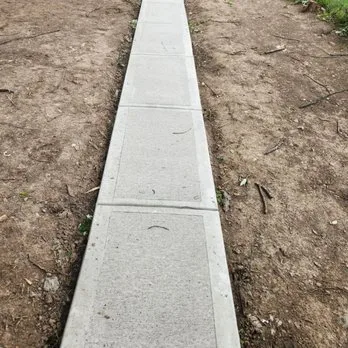
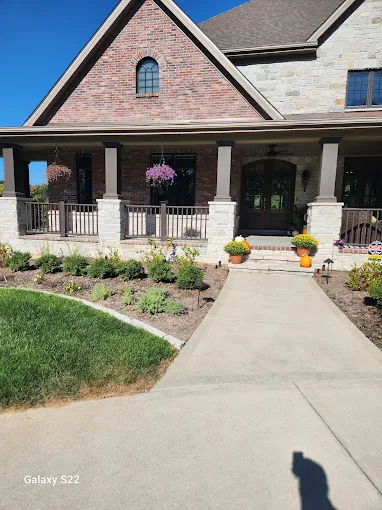
Pressure washing belongs on hard, mineral-based surfaces in sound condition: concrete driveways and patios, modern brick, natural stone, and pavers. These materials tolerate thousands of PSI — and they need it, because tire grime, oil film, and embedded dirt bond to them too tightly for low pressure to lift.
- Concrete driveways & walkways — annual cleaning strips salt film, tire marks, and organic buildupPressure
- Concrete & paver patios — followed by re-sanding on pavers when joints wash leanPressure
- Modern brick & natural stone — sound mortar joints requiredPressure
- Retaining walls (block/poured) — moderate pressure, fanned tipsPressure
Even here, technique matters. The difference between cleaning and etching a slab is tip selection, distance, and knowing the surface: a turbo nozzle that's fine on a newer 4,000 PSI slab can scarify a 20-year-old unsealed driveway. Older or visibly worn concrete gets dialed-back pressure and more detergent dwell — the judgment calls our concrete cleaning crews have been making in St. Louis for three decades. A cleaned slab is also the required first step before sealing, which is covered in our freeze-thaw protection guide.
Pavers are the special case in the pressure column. The bricks themselves handle pressure fine, but the jointing sand between them does not — an aggressive wand pass blows the joints empty, and empty joints invite weeds, ants, and shifting. Paver cleaning is done at controlled pressure and angle, and a thorough wash should be followed by re-sanding with polymeric sand where the joints have washed lean. If a paver surface is getting cleaned as part of a bigger restoration, that's a different scope than a wash alone.
Which Surfaces Need Soft Washing Instead?
Anything that can dent, splinter, delaminate, or let water behind it: asphalt shingle roofs, vinyl and fiber-cement siding, stucco, painted wood, decks and fences, and older brick with aging mortar. On these surfaces, high pressure causes permanent damage that costs far more than the cleaning saved.
- Asphalt shingle roofs — the black streaks are algae; detergent kills it, pressure destroys shinglesSoft Wash
- Vinyl & fiber-cement siding — pressure forces water behind panels and into wall cavitiesSoft Wash
- Painted wood, decks & fences — high pressure furs the grain and strips finishSoft Wash
- Stucco & EIFS — pressure gouges the finish coatSoft Wash
- Older brick & soft mortar — pressure blows out joints and spalls facesSoft Wash
Roofs deserve the strongest warning. Those dark streaks running down St. Louis roofs are a hardy algae that feeds on the limestone filler in shingles, and it spreads in exactly the humid conditions this region provides. The only correct removal is a low-pressure detergent application that kills it — every shingle manufacturer says the same thing, and several will void a warranty over evidence of pressure washing.
What Happens When You Use the Wrong Method?
Wrong method, real damage: pressure on a roof strips shingle granules and years of roof life; pressure on siding drives water into the wall cavity where it feeds hidden mold; pressure on wood furs and splinters the grain. And a soft wash on filthy concrete simply won't get it clean — mismatch runs both directions.
The costliest mistakes are the invisible ones. Granule loss on a roof and water forced behind siding don't show up the day of the wash — they show up seasons later as premature roof aging or a musty wall. That's why "it looked fine afterward" is not proof the method was right.
This is also the honest case for hiring it out rather than renting a machine. Rental pressure washers ship with aggressive tips, no downstream detergent setup, and no way to soft wash at all — so weekend jobs default to "more pressure" on every surface. A professional crew carries both systems, is insured for the work, and knows where the line is on each material. BTS Outdoor Solutions is licensed and fully insured on every job, and we're happy to explain the method choice on the estimate before anything gets sprayed.
Why Does St. Louis Grime Come Back So Fast?
Humidity. St. Louis summers keep exterior surfaces damp enough, long enough, for algae, mildew, and mold to colonize — especially north-facing walls and shaded roof planes that never fully dry. Add pollen, clay dust, and winter road-salt film, and exteriors here re-soil faster than in drier climates.
The practical consequences for a maintenance schedule:
- North sides go green first. Less sun means slower drying, and slower drying means algae. If one wall of your house always looks dirty, it's almost certainly the north face.
- Shade trees trade grime for comfort. Homes under mature oaks in Kirkwood or Webster Groves collect organic debris and hold moisture — worth twice-yearly attention on concrete under the canopy.
- Winter leaves a salt film. Deicer residue tracked up the driveway dulls concrete and accelerates surface wear; a spring wash removes it before summer humidity glues grime on top. If your driveway is showing actual flaking rather than just dirt, read our driveway repair-or-replace guide — that's a concrete problem, not a cleaning problem.
- Annual rhythm works. For most St. Louis homes: concrete washed yearly, siding soft washed every 1–2 years, roof treated when streaks appear.
One more timing note: washing is prep work as much as appearance work. If concrete sealing, joint caulking, or painting is on the calendar, the wash comes first — sealers and coatings applied over grime bond to the grime, not the surface, and fail early. Scheduling the wash a week or two ahead gives everything time to dry fully before the next trade shows up. That's also why we quote cleaning and sealing together when a driveway needs both: one mobilization, correct sequencing, and the sealer goes down on a surface that's actually ready for it.
Pressure vs Soft Washing FAQ
Can I pressure wash my roof?
No. High pressure strips the protective granules off asphalt shingles, shortens roof life, and can void the manufacturer warranty. Roofs are cleaned with a soft wash — 40–80 PSI and a detergent solution that kills the algae causing black streaks — so the growth dies at the root without disturbing the shingles.
How often should a St. Louis home be washed?
Siding benefits from a soft wash every 1–2 years in the St. Louis climate — humidity feeds algae and mildew, especially on north-facing walls. Driveways and other concrete do well with annual pressure washing, ideally in spring after winter salt or in fall after leaf season.
Will soft-wash detergents harm my landscaping?
Not when the job is done correctly. Professional soft washing uses biodegradable detergents, and the standard protocol is to pre-wet surrounding plants and beds, control overspray, and rinse everything thoroughly afterward so nothing sits concentrated on foliage or roots.
Does pressure washing remove oil stains from concrete?
Pressure alone usually lightens oil stains but does not remove them — oil penetrates the pores of the concrete. Professional concrete cleaning pairs pressure with a degreaser dwell so the stain lifts out of the pore structure instead of just off the surface. Old, deep stains may take more than one treatment.